
Agentic AI Goes Mainstream as Tech Giants Bring Autonomous Agents to Enterprise Tools
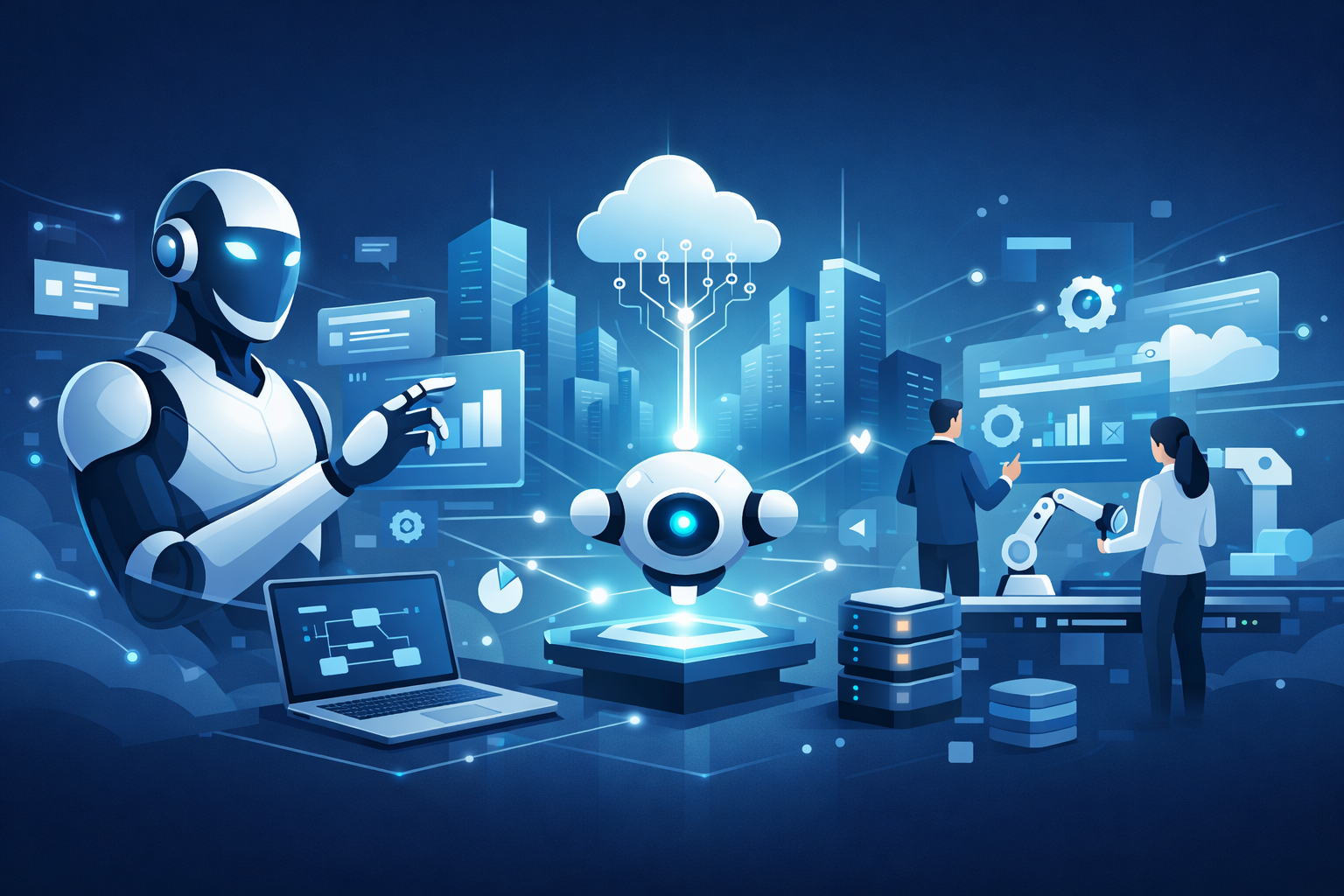
From Chatbots to Agents That Take Action
If you have been following AI, you have probably noticed a shift in the conversation. The buzz is no longer just about chatbots that answer questions. It is about AI agents that can actually do things for you, like send emails, update spreadsheets, build reports, and manage workflows across multiple tools.
This month, two major announcements made it clear that agentic AI is no longer experimental. It is going mainstream.
Anthropic Launches Enterprise Plugins for Claude
Anthropic announced customizable enterprise plugins that allow Claude to act directly within tools like Excel, PowerPoint, Google Drive, and Gmail. Instead of telling you what to do, Claude can now complete multistep tasks on its own within these connected systems.
What this looks like in practice:
- Draft and send emails based on meeting notes
- Update spreadsheets with data pulled from reports
- Create presentations from documents you provide
- Manage files across Google Drive and other storage platforms
This positions Claude as more than a chat assistant. It becomes an AI operating layer that sits on top of the tools businesses already use every day.
Meta Integrates Manus AI into Ads Manager
Meta took a different approach by embedding its Manus AI agent technology directly into its Ads Manager platform. Manus, which Meta acquired in late 2025, is designed to handle multistep tasks such as:
- Market research to identify audience segments
- Campaign analysis to surface performance insights
- Report building that pulls data from multiple ad campaigns
For advertisers, this means less time clicking through dashboards and more time making strategic decisions while the agent handles the routine work.
What Exactly Is an AI Agent?
If you are new to this concept, here is a simple breakdown. A traditional chatbot waits for you to ask a question and gives you an answer. An AI agent goes further:
- It understands a goal you give it, like "prepare a weekly sales report"
- It breaks that goal into steps, such as pulling data, formatting a spreadsheet, and emailing it to your team
- It executes those steps across multiple tools without needing you to guide each one
- It handles errors and adapts if something does not go as planned
Think of it as the difference between asking someone for directions versus hiring a driver who takes you there.
Why This Matters
The shift to agentic AI has real implications:
- Productivity gains. Tasks that took 30 minutes of clicking through different apps could be reduced to a single prompt.
- Lower barrier to entry. You do not need to be a power user of Excel or Google Ads to get expert-level output.
- New job skills. Learning how to direct and manage AI agents is becoming a valuable workplace skill.
What to Explore
If you want to get ahead of this trend, consider experimenting with:
- Claude's enterprise features if your workplace uses Anthropic's tools
- Custom GPTs and assistants in ChatGPT for building your own simple agents
- Automation platforms like Zapier or Make that connect AI to your existing workflows
The era of AI that just talks is giving way to AI that works. Understanding how to use these tools now will put you ahead as they become standard in every workplace.